
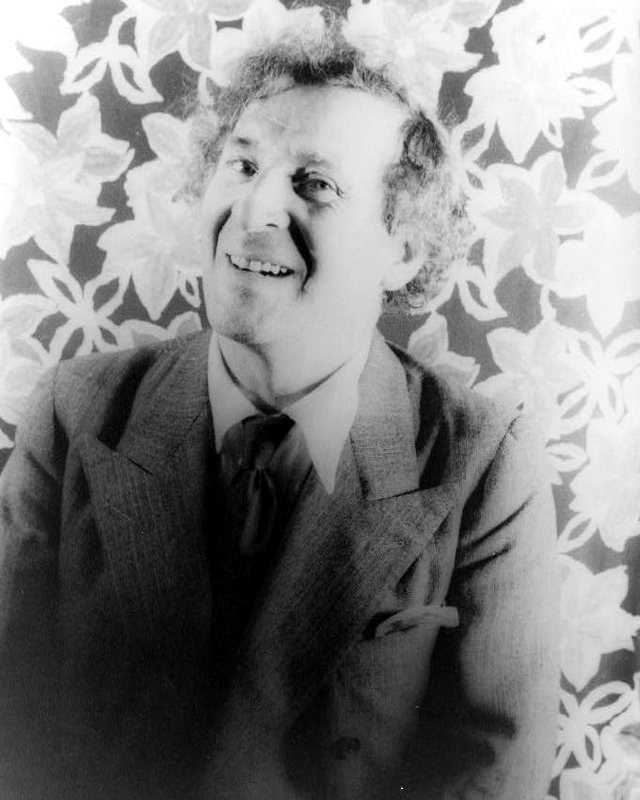
Early Life in Vitebsk
Marc Chagall was born Moishe Shagal on 6 July 1887 (24 June in the old Russian calendar) into a Jewish family near the city of Vitebsk, in what is now Belarus and was then part of the Pale of Settlement of the Russian Empire. The eldest of nine children, he grew up in a household of modest means: his father worked for a herring merchant, carrying heavy barrels, and his mother sold groceries from their home. More than half of the inhabitants of Vitebsk were Jewish, and the town, with its churches and synagogues, its wooden houses and its markets, would remain the principal landscape of his imagination for the rest of his life.
Jewish children in the Russian Empire of this period were excluded from regular schools, and Chagall received his early education at the local Jewish religious school, where he studied Hebrew and the Bible. At thirteen his mother, by the payment of a fee, secured him a place in a regular secondary school. It was there that he first noticed a fellow pupil drawing, an experience he later described as a revelation. He began to copy pictures from books, and soon decided that he would become an artist. In 1906 he entered the drawing school of the realist painter Yehuda Pen in Vitebsk, where El Lissitzky and Ossip Zadkine were also pupils.
Saint Petersburg
Later that year Chagall moved to Saint Petersburg, then the capital of the Russian Empire and the centre of its artistic life. Jews could enter the city only with an internal passport, and he obtained a temporary one from a friend. He studied at an art school for two years, and from 1908 to 1910 was a pupil of Léon Bakst at the Zvantseva School of Drawing and Painting. Bakst, who was himself Jewish, was famous as the designer of sets and costumes for the Ballets Russes, and he served as a model of Jewish success. In these years Chagall discovered experimental theatre and the work of Paul Gauguin, and he returned frequently to Vitebsk, where he met Bella Rosenfeld, who would become his wife and the great love of his life.
Paris, 1910 to 1914
In 1910 Chagall moved to Paris, at the age of twenty-three. He arrived unable to speak French, lonely and sometimes inclined to flee, but the city exhilarated him, and he spent his free hours in the Louvre and in the galleries, studying Rembrandt, Chardin, van Gogh, Gauguin, Matisse and many others. He enrolled at the Académie de La Palette, where Jean Metzinger and Henri Le Fauconnier taught, and he made friends among the avant-garde, including Robert Delaunay and Fernand Léger. His first recognition came less from painters than from poets, notably Blaise Cendrars and Guillaume Apollinaire.
The paintings of these years combine the Jewish and Russian folklore of his childhood with the new language of Parisian painting. Under the influence of Cubism and the colour theories of Delaunay he developed a repertoire of motifs that were wholly his own: figures floating in the sky, fiddlers dancing on rooftops, animals with human faces, and entire villages turned upside down. Most of his scenes of Vitebsk were painted while he lived in Paris, and they have been described as dreams. Apollinaire, struck by their quality, called them supernatural. The critic James Sweeney wrote that Chagall's contribution was the reawakening of a poetry of representation, avoiding factual illustration on the one hand and non-figurative abstraction on the other. André Breton remarked that with him alone the metaphor made its triumphant return to modern painting.
Berlin, Vitebsk and the Revolution
In 1914 Chagall accepted an invitation from the dealer Herwarth Walden to exhibit at his Sturm Gallery in Berlin. The exhibition, of some forty canvases and a hundred and sixty gouaches, watercolours and drawings, was a considerable success. He then travelled on to Vitebsk, intending to marry Bella and return to Paris with her, but the outbreak of the First World War closed the border. He married Bella in 1915 and their daughter Ida was born soon afterwards. The paintings of these years, in which the young couple float over Vitebsk, are among the happiest of his career.
His reputation grew quickly in Russia. He exhibited in Moscow in 1915 and in Petrograd in 1916, collectors began to buy his work, and in 1917 he illustrated I. L. Peretz's The Magician. After the October Revolution of 1917 he was appointed commissar of arts for Vitebsk, and he founded there both the People's Art College, which attracted artists including El Lissitzky and Kazimir Malevich, and an art museum. In May 1920 the Suprematists, who disliked his individualism, took over the academy, and Chagall resigned and left for Moscow, where he created large murals for the new State Jewish Chamber Theatre, one of which a critic called Hebrew jazz in paint. In 1921 and 1922 he lived in difficult conditions near Moscow and taught orphaned refugees in a children's shelter at Malakhovka. Seeking a more congenial country in which to work, he applied for an exit visa, and while waiting wrote his autobiography, My Life.
France between the Wars
Chagall left Russia in 1923. On the way to France he stopped in Berlin to recover the pictures that he had left there ten years earlier, but could not find them, and his early works were lost. In Paris he formed a decisive relationship with the dealer Ambroise Vollard, who commissioned him to make etchings for illustrated editions of Gogol's Dead Souls, the Fables of La Fontaine and the Bible. These illustrations are counted among his finest achievements in printmaking. He travelled widely in France, and the light and vegetation of the south made a deep impression on him. In 1926 he had his first exhibition in the United States, at the Reinhardt Gallery in New York.
For the Bible commission he travelled in 1931 to Mandatory Palestine, where he stayed for two months, and he later said that it gave him the most vivid impression he had ever received. He worked on the Bible illustrations between 1931 and 1934, and went to Amsterdam to study the biblical paintings of Rembrandt. In the 1930s, as the Nazis came to power in Germany, his work was held up to ridicule, and in 1937 modernist art was confiscated from German museums as degenerate. After the German occupation of France, Chagall and his family remained for a time in Vichy France. With assistance from Alfred Barr of the Museum of Modern Art and from the American rescue committee led by Varian Fry, the artist and his family escaped, and he reached the United States in 1941.
The American Years
In New York, Chagall was already known: he had received the Carnegie Prize in 1939, and he now found that he had achieved international stature. He felt out of place and, since he did not yet speak English, depended on the Yiddish press for news. He befriended other exiles, among them Piet Mondrian and André Breton, and in 1941 Pierre Matisse became his dealer. In 1942 he designed sets and costumes for Léonide Massine's ballet Aleko, which was premiered in Mexico City to a remarkable success, with nineteen curtain calls, and presented a few weeks later at the Metropolitan Opera in New York.
As the war went on, news of the destruction of Vitebsk and of the persecution of the Jews entered his work. His paintings of the early 1940s include Crucifixion subjects and scenes of war. On 2 September 1944 Bella died suddenly, of a streptococcal infection, and for many months he stopped painting. His first works after the loss were inspired by her memory. In 1946 the Museum of Modern Art in New York mounted a large exhibition covering forty years of his work, and in 1947 he returned to France.
The South of France
After the war Chagall settled on the Côte d'Azur, where Henri Matisse lived near Vence and Picasso at Vallauris. In 1952 he married Valentina Brodsky, known as Vava, who had been introduced to him by his daughter, and who ran his household and business for the rest of his life. In these years he expanded his practice beyond painting and graphic art, and produced sculpture, ceramics, tapestries, mosaics, murals and stained glass.
In 1963 he was commissioned to paint the new ceiling of the Palais Garnier, the Paris Opera. The choice was not uncontroversial, since some objected to a Russian-born Jew decorating a French national monument, but Chagall completed the work in a year. At the age of seventy-seven he created a canvas of about 2,400 square feet in homage to the composers Mozart, Wagner, Mussorgsky, Berlioz and Ravel, and to the great actors and dancers. It was presented on 23 September 1964, and the press declared it a great contribution to French culture. He also painted two monumental murals for the Metropolitan Opera house at Lincoln Center, which opened in 1966.
Stained Glass
Chagall's work in stained glass was one of his major contributions to modern art. He designed his first windows in 1956, when he was nearly seventy, and found in the medium a way to realise the intense colour that had always concerned him, together with the changing light of day. The most celebrated commission was the set of twelve windows for the synagogue of the Hadassah Medical Center of the Hebrew University in Jerusalem, representing the twelve tribes of Israel, which were dedicated in 1962.
Other windows followed: for the United Nations in New York, where the window Peace of 1964 honours Dag Hammarskjöld, for the Fraumünster in Zürich, for the cathedrals of Reims and Metz, for All Saints' Church at Tudeley in Kent, for Chichester Cathedral, for St Stephan's church in Mainz, and for the Art Institute of Chicago, where the America Windows were conceived as a tribute to the American Bicentennial. Chagall said that a stained-glass window is a transparent partition between the heart and the heart of the world.
Death and Legacy
Chagall continued to work almost until the end. His final commission was a tapestry for the Rehabilitation Institute of Chicago, for which he had completed the maquette, titled Job. He died in Saint-Paul-de-Vence on the evening of 28 March 1985, at the age of ninety-seven, and was buried in the town's cemetery. Writers have described him as the last survivor of the first generation of European modernists. His life spanned the Russian Revolution, the end of the Pale of Settlement and the destruction of European Jewry, and the experience of exile, and his work is among the most poetic expressions of these experiences.
Chagall's biographer Jackie Wullschlager has described him as a pioneer of modern art and one of its greatest figurative painters. André Malraux called him the greatest image-maker of the century. His work is held in public collections around the world, and the Musée Marc Chagall in Nice, which he helped to design, is devoted to it.
Collecting Chagall
Chagall worked in painting, drawing, printmaking, ceramics and tapestry across more than seven decades, and consequently the questions that a collector faces are those of medium, edition and authentication as well as of period. An online catalogue raisonné of the artist, in progress since 2019, is being prepared by the Association des Amis de Marc Chagall, in conjunction with the Archives Marc et Ida Chagall and the Marc Chagall Committee. Its online publication began in 2023 with the sculptures, and in 2024 with the ceramics. Because works from his earliest years were lost, and because the war and exile led to the dispersal of others, provenance and exhibition history are especially important in assessing any work attributed to him.